Between popular culture, museum recognition, and the secondary market, KAWS confirms a rare position: that of an artist whose visual power attracts a broad audience, while whose finest works demand the analysis of a serious collector.
Market Analysis
KAWS: How Institutional Exhibitions Strengthen His Position in the Art Market
KAWS exhibitions at SFMOMA and Albertina Modern confirm the institutional consolidation of an artist who has become central to the dialogue between contemporary art, popular culture, and the secondary market.
ByRevela Editorial
Read7 min
#contemporary art#art market#private collection#KAWS#KAWS FAMILY#KAWS Art & Comix#SFMOMA#Albertina Modern
KAWS: From Museums to Market — the Consolidation of an Artist Between Contemporary Art and Popular Culture
KAWS occupies a singular position in contemporary art today. Rooted in graffiti, creator of immediately recognisable characters, monumental sculptor, brand collaborator, and figure followed by an international audience — Brian Donnelly has built a visual language that circulates between museum, street, private collection, and secondary market.
That trajectory now finds particular resonance in two major institutional exhibitions.
KAWS: FAMILY at SFMOMA — a Historic West Coast Premiere
In San Francisco, KAWS: FAMILY, presented at SFMOMA from 15 November 2025 to 3 May 2026, marked the artist's first major museum exhibition on the American West Coast. The show traced nearly three decades of creation — paintings, drawings, sculptures, advertising interventions, collaborations, and collectible toys.
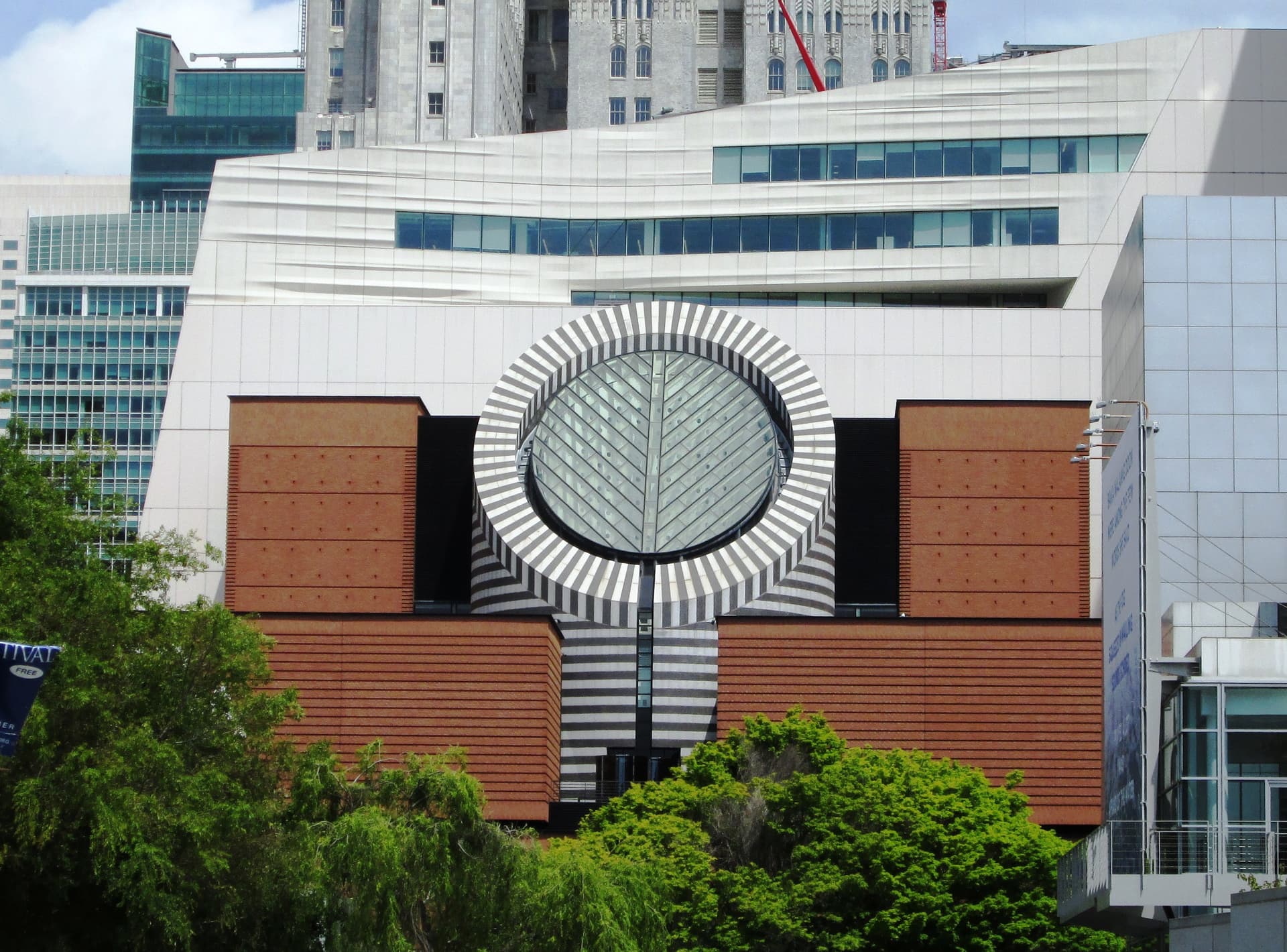
SFMOMA San Francisco — view from Yerba Buena Gardens (2017)
KAWS. Art & Comix at Albertina Modern — Anchoring the Work in Image History
In Vienna, KAWS. Art & Comix, on view at the Albertina Modern from 3 April to 27 September 2026, situates the artist within a broader inquiry into the relationships between comics, cartoons, popular culture, and fine art. The exhibition places KAWS in dialogue with artists including Jean-Michel Basquiat, Roy Lichtenstein, Keith Haring, Joyce Pensato, Peter Saul, and Kenny Scharf, focusing on the visual autonomy of his characters.
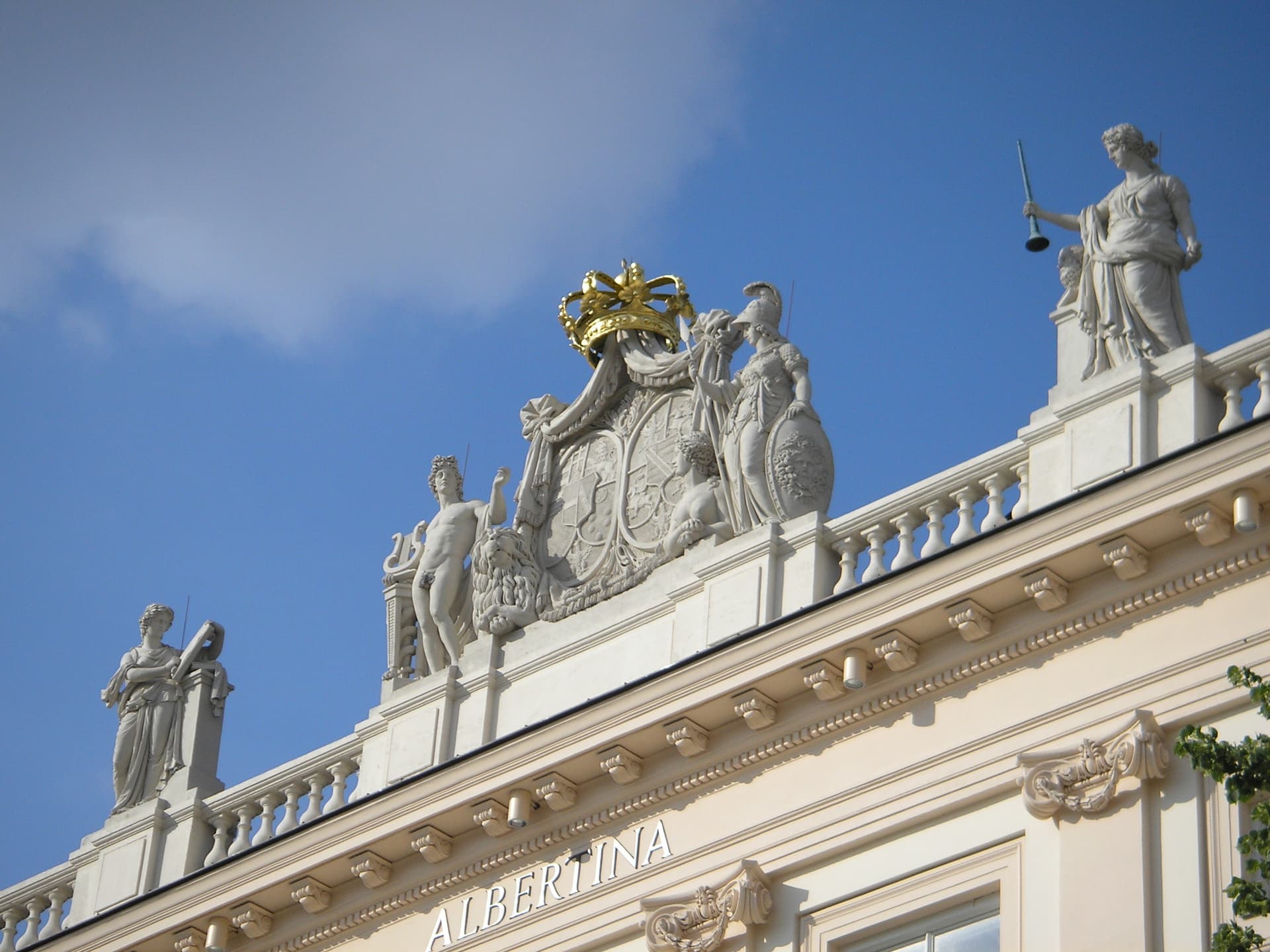
Albertina Modern, Vienna — building (June 2006)
The Institutional Stakes: Beyond Popularity
This institutional context is essential. The question is no longer simply whether KAWS is popular, but how museums are now structuring the reading of his work. Figures like COMPANION, CHUM, and BFF are not presented as mere graphic icons. They are repositioned within a history of the reproducible image, the cartoon, cultural consumption, and collective emotion.
KAWS has always blurred boundaries. His work draws from mass visual culture while deploying the traditional formats of contemporary art: canvas, sculpture, installation, edition, and public work. Christie's underscores this position at the interface between so-called "high" and "low" culture, in the lineage of artists such as Andy Warhol, Jeff Koons, and Takashi Murakami.
A Consolidation Signal for Collectors
For collectors, this institutional recognition acts as a consolidation signal. It guarantees neither a mechanical price increase nor immediate liquidity — but it strengthens the critical framework within which a work can be assessed. In KAWS's case, that distinction is decisive: a painting, a monumental sculpture, an edition, a collaborative object, and a collectible do not operate under the same logic of scarcity, conservation, and market dynamics.
The Secondary Market: Records and Stratification
The secondary market has already absorbed this complexity. In 2019, The KAWS Album sold at Sotheby's Hong Kong for HK$116 million — approximately US$14.8 million — establishing a public record for the artist at the time. That result substantially cemented KAWS in discussions about the value of artists emerging from popular culture and street art.
But reducing KAWS to his auction records would be a mistake. His market is stratified. Major iconic canvases, significant sculptures, and works historically tied to his most important characters belong to an entirely different segment from prints, figurines, or commercial collaborations. Phillips lists KAWS works across past and upcoming sales, reflecting the variety of media and price levels associated with his market.
Mapping the Work: What Museums Contribute
The exhibitions at SFMOMA and Albertina Modern help clarify precisely this cartography. They shift the focus from mere immediate desirability toward the depth of a body of work. They remind us that KAWS is not solely an artist of the viral image, but a producer of forms capable of traversing different regimes of value: emotional, institutional, cultural, and commercial.
This recognition arrives at a moment when collectors are more attentive than ever to quality, provenance, and the coherence of acquisitions. For a work by KAWS, the analytical criteria must be rigorous: period, medium, dimensions, condition, edition (if applicable), exhibition history, provenance, and position within the artist's overall trajectory.
The Value of Private Sales and Curation
This is where private sales and curation come into their own. On a highly visible market — sometimes saturated with derivative objects or multiple editions — accessing relevant works requires selective reading. Confidentiality also allows certain opportunities to be approached without excessive public exposure, particularly for collectors looking to build or strengthen a coherent body around contemporary art, pop art, or urban visual cultures.
KAWS embodies one of the most revealing cases of collecting in the twenty-first century. His work speaks to multiple generations, crosses the boundary between art and design, and questions how a popular image can become a museum object. Institutional exhibitions do not close the debate on his place in the history of contemporary art. They make it more precise.
Sources:
- SFMOMA — KAWS: FAMILY
- Albertina Modern — KAWS. Art & Comix
- Christie's — KAWS artist profile
- Sotheby's — The KAWS Album sale
- Phillips — KAWS artist profile
#KAWS #KAWSfamily #KAWSartcomix #SFMOMA #AlbertinaModern #contemporaryart #artmarket #secondarymarket #privatecollection #privatesales #popularcultureart #urbanart #popart #revelaclub